Business Law Story
Why it Matters
The course took business law apart one subject at a time, from agency in Activity 1 to environmental law in Activity 12. A real company meets those subjects in order, and each legal decision sets up the next one. PetPals forms its LLC in Chapter 3 because a partnership with nothing in writing nearly broke it in Chapter 2. It files for bankruptcy in Chapter 7 because the workout on its Chapter 6 bank loan ran out. Writing that company’s story chapter by chapter, and checking the AI’s law at every step, shows that you can trace how the doctrines connect and explain them in a form people will actually read.
PetPals Unleashed
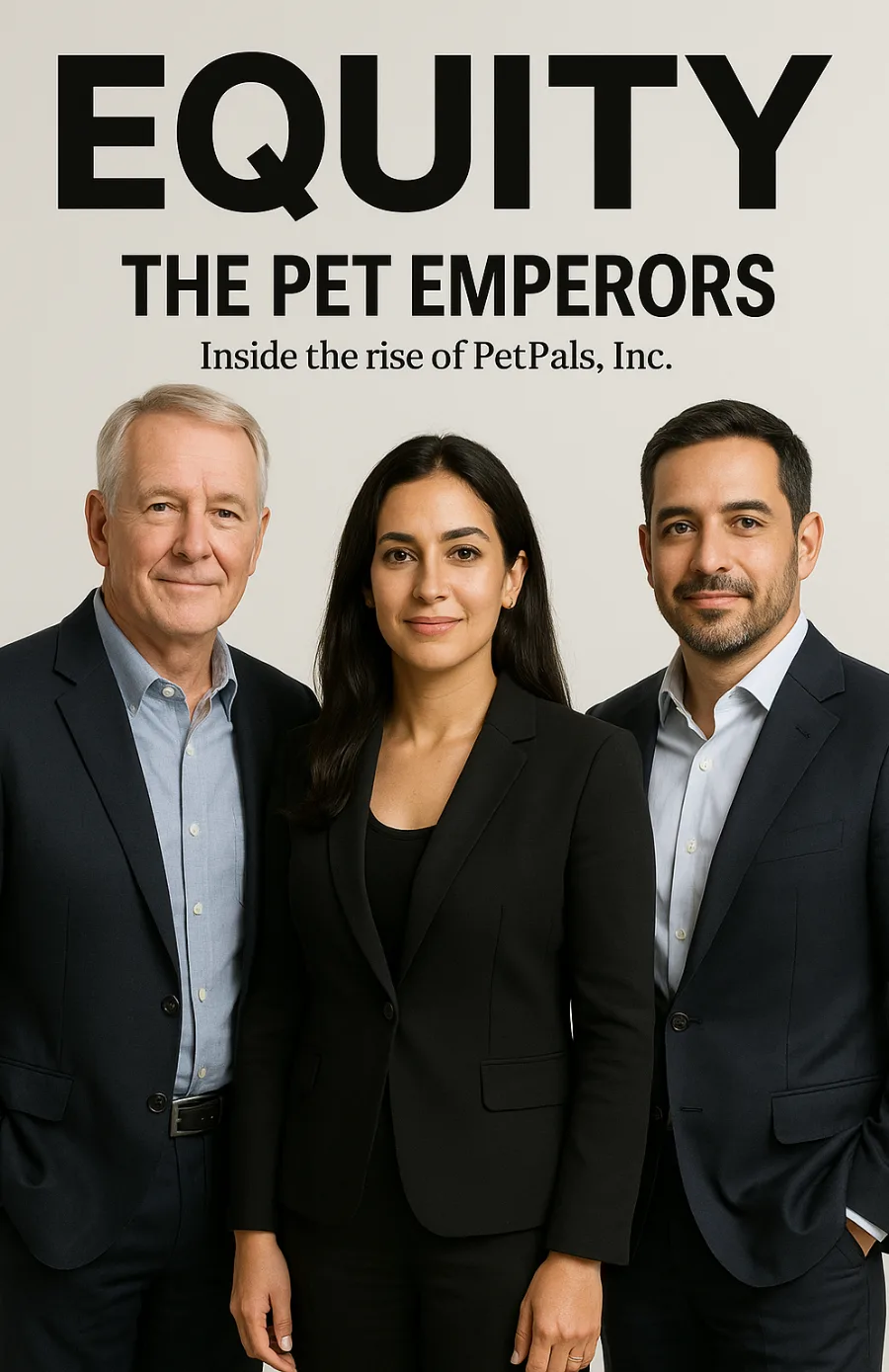
Introduction
The conference room smelled like dog treats and fresh coffee. Twenty-three summer interns sat around the mahogany table, laptops closed, phones tucked away. This wasn’t your typical corporate orientation.
“You want the real story?” Buddy asked, rolling up his sleeves. He was sixty-two, built like a guy who still unloaded his own trucks. “Not the Wikipedia version?”
A kid in the front row, Cornell according to his name tag, nodded. “Yes, sir.”
“Don’t call me sir. I sell dog food.” Buddy glanced at the woman beside him. “Pepper, you remember our first office?”
“Your garage.” Pepper adjusted her glasses. She had that look, the one that said she’d caught every mistake before it cost money. “Smelled like motor oil and rawhide.”
“Better than our second office,” said the man at the end of the table. That was Noodle, General Counsel, the only lawyer Buddy trusted. Gray suit, no tie. He’d been there since the partnership days, back when legal advice came with beer and pretzels.
“What was wrong with the second office?” Another intern, this one from Stanford.
“Shutdown order from the health department.” Noodle smiled. “Turns out you can’t store beef next to brake fluid. Who knew?”
The interns laughed. Good. They were loosening up.
Buddy leaned forward. “Here’s what nobody tells you about building a company. Every mistake costs money. Every contract matters. Every handshake deal you make at 2 AM will come back three years later when someone’s suing you for half your business.”
“That’s why we have Noodle,” Pepper said.
“That’s why you need a Noodle,” Buddy corrected. “But we didn’t always have him. Started with just me, a meat grinder, and a stupid idea that dogs deserved better than the crap they were eating.”
Cornell raised his hand. “How’d you go from grinding beef in your garage to…” He gestured at the glass walls, the forty-floor view of downtown. “This?”
“One lawsuit at a time,” Noodle said.
“One partnership at a time,” Pepper added.
Buddy stood up, walked to the window. Outside, delivery trucks with the PetPals logo navigated lunch-hour traffic. “Twelve years. That’s what it took. Twelve years of seven-day weeks, maxed-out credit cards, and more legal BS than you’d believe.”
He turned back to the interns. “So yeah, I’ll tell you the real story. The agency problems, the UCC violations, the SEC investigation, all of it. Because if you’re going to work here, even for a summer, you need to know what built this place.”
“And what almost killed it,” Pepper said quietly.
“Multiple times,” Noodle added. He opened a folder, thick with old documents. “Should we start with the franchise deal that wasn’t? Or the partnership from hell?”
“Start at the beginning,” said the Stanford kid. “The garage.”
Buddy grinned. First time all morning. “Alright. Picture this: It’s 2013. I’m forty-nine, just laid off from the Purina plant. Severance check burning a hole in my pocket. And my bulldog, Tank, ugliest dog you ever saw, won’t eat his food…”
The interns leaned in. Even Pepper smiled, remembering.
This was going to be a long morning. But then again, the best stories always were.
Chapter 1
Buddy hires his nephew Jake to help deliver Beef Bits, giving him verbal authority to “do whatever it takes” to grow the business. Jake signs a $50,000 lease for warehouse space without telling Buddy, who can’t afford it. It was only later, after Buddy brought Noodle on, that he fully understood what those loose instructions had cost him legally: a lesson in apparent authority that came with a second mortgage.
Chapter 2
Buddy brings in Pepper as a 50/50 partner to manage operations, but they never sign a formal partnership agreement. When Pepper starts making unilateral decisions about product expansion, they nearly split until Noodle drafts their first real partnership agreement, saving both the business and the friendship.
Chapter 3
After the partnership stress, Noodle convinces them to form PetPals LLC to protect personal assets. Just in time: a customer’s dog gets sick and the family sues for $2 million. The LLC structure shields Buddy and Pepper’s homes while they navigate their first major product liability crisis.
Chapter 4
Venture capital comes calling, but investors want PetPals to incorporate and give up significant control. Buddy resists until Noodle structures a deal using different share classes that preserves founder control. They incorporate in Delaware and prepare for rapid scaling.
Chapter 5
After closing the venture capital round, PetPals has a real board for the first time. Everything runs smoothly until Noodle discovers that a VC-appointed director voted to approve a $3.1 million packaging contract with a company he secretly co-owns. He never disclosed the conflict. He never recused himself. Noodle has to navigate the duty of loyalty, a threatened derivative suit, and a VC relationship PetPals cannot afford to lose, all at once.
Chapter 6
Desperate for capital to expand online, PetPals uses its inventory and equipment as collateral for a bank loan. When they miss a payment during website development, the bank threatens to seize everything. Noodle navigates security interests and negotiates a workout agreement that buys them time, though the underlying debt problem is not yet solved.
Chapter 7
The workout agreement expires and the bank moves to collect. With seventy-two hours before the bank seizes PetPals’ assets, Noodle files a voluntary Chapter 11 bankruptcy petition. The automatic stay stops the bank cold. What follows is a painful but survivable reorganization: restructured debt, shed contracts, and a company that emerges leaner and still intact. PetPals made sure it never needed Chapter 11 again. The reorganization also cleared the path for what would eventually become the most complicated legal event in the company’s history.
Chapter 8
PetPals’ first warehouse manager starts a competing business using customer lists and gets fired. She sues for wrongful termination and gender discrimination. Noodle realizes they never had proper employment agreements or handbooks, leading to a costly settlement and a complete HR overhaul.
Chapter 9
PetPals launches its biggest marketing campaign (“Pure. Simple. Real.”) with claims that Beef Bits are all natural, veterinarian recommended, and clinically proven to support joint health. Six weeks later, the FTC sends a substantiation inquiry. The same week, a Florida consumer files a FDUTPA class action challenging the all natural claim. Noodle has to manage a federal investigation and a state class action simultaneously while Pepper figures out what to do with a campaign that is already running nationally.
Chapter 10
PetPals goes public. Buddy, energized by the IPO roadshow, makes optimistic statements to analysts without clearing them with legal. When the projections fall short, the SEC opens an investigation into potential securities fraud. Noodle manages the inquiry while building the Reg FD compliance program and quiet period protocols that should have existed before the first analyst call.
Chapter 11
PetPals moves to acquire NatureBowl Inc., its largest regional competitor. The Hart-Scott-Rodino filing goes in and the waiting period begins. Then the FTC issues a second request, a signal that the combined company’s market share in the premium dry dog food segment has caught the agency’s attention. Noodle briefs the board on the 2023 Merger Guidelines and the structural presumption their numbers trigger. PetPals has to decide whether to fight, negotiate a consent decree, or walk away from the deal entirely.
Chapter 12
A surprise EPA inspection at PetPals’ new manufacturing facility uncovers improper disposal of manufacturing waste. Facing millions in potential fines and cleanup costs, Buddy and Pepper are forced to build an environmental compliance program from scratch. The crisis eventually pushes them toward sustainable packaging, a decision that starts as damage control and ends as one of the best marketing moves the company ever made.
Key Concepts
Apparent Authority
The power an agent appears to have because of the principal’s own words or conduct, which a third party reasonably relies on. It binds the principal to deals the agent had no actual permission to make. Chapter 1 turns on it, and your version of the chapter has to show Buddy’s loose instructions creating the appearance, not Jake inventing it.
Limited Liability
The protection that keeps an owner’s personal assets out of reach of the business’s creditors, available through an LLC or a corporation. A Florida court sets it aside only when an owner misuses the company for an improper purpose, and for an LLC the statute says skipped formalities are not enough. Chapters 3 and 4 depend on the shield, and it has to work in your chapters the way it works in the law.
Fiduciary Duty
The loyalty and care that partners owe the partnership and each other, and that directors owe the corporation. Chapter 2 and Chapter 5 are both fiduciary stories, one about partners without an agreement and one about a director who hid a conflict, and the remedy in each has to match the breach.
Security Interest and the Automatic Stay
A lender’s right in specific collateral, usually perfected by filing a financing statement, and the federal injunction that halts collection the moment a bankruptcy petition is filed. Chapters 6 and 7 are one continuous story about the same debt, and the bank’s rights before and after the filing have to be portrayed accurately.
Substantiation
The FTC’s requirement that an advertiser have a reasonable basis for an objective claim before making it. For a health claim, that basis is generally competent and reliable scientific evidence. Chapter 9’s three claims fail it in three different ways, and your chapter should show why each one fails.
Material Misrepresentation
A false or misleading statement about a fact a reasonable investor would consider important in deciding whether to buy or sell. Chapter 10 needs Buddy’s analyst comments to be the kind of statements that actually draw an SEC investigation. Regulation FD is a separate SEC rule, which bars a public company from giving material nonpublic information to analysts while the public goes without it.
Structural Presumption
The rule that a merger is presumed anticompetitive when it leaves a market highly concentrated and significantly increases concentration, both measured by the Herfindahl-Hirschman Index under the 2023 Merger Guidelines. A second request, the agency’s demand for more documents, extends the Hart-Scott-Rodino waiting period. Chapter 11 needs both, and the board’s options, described correctly.
Strict Liability
Responsibility without fault, the standard CERCLA applies to contamination and the reason environmental compliance is built on prevention. Chapter 12’s inspection and the program that follows should reflect the cradle-to-grave rules of the Resource Conservation and Recovery Act (RCRA) for hazardous waste rather than a generic fine.
Resources
- Business Law and the Legal Environment, table of contents (opens in a new tab) (The course textbook; every chapter of the story maps to a chapter here, and the Legal Verifier’s corrections should be checked against it.)
- Wex, Cornell Legal Information Institute (opens in a new tab) (Plain-language definitions of every legal term the story uses; the fastest way to confirm a doctrine before it goes in a chapter.)
- Google Scholar (opens in a new tab) (Free case law search for confirming any decision the AI names; select Case law.)
- Westlaw via the Daytona State College Library (opens in a new tab) (Full-text legal research with your college login.)
- Florida Division of Corporations Search, Sunbiz (opens in a new tab) (Real articles of organization and incorporation, useful for making the filings in Chapters 3 and 4 realistic.)
- Florida Statutes Chapter 605, Florida Revised Limited Liability Company Act (opens in a new tab) (The statute behind PetPals LLC in Chapter 3.)
- EDGAR Full-Text Search, SEC (opens in a new tab) (Real IPO registration statements and 10-Ks to draw on for Chapter 10.)
- Guide to Antitrust Laws, FTC (opens in a new tab) (The FTC’s plain-language explanation of merger review for Chapter 11.)
- Enforcement and Compliance History Online, EPA (opens in a new tab) (Real inspection and enforcement records to ground Chapter 12.)
- Copyright and Artificial Intelligence, U.S. Copyright Office (opens in a new tab) (What you own, and do not own, in the AI-generated illustrations from Part 2.)
What to Do
The book you make here has twelve chapters, one page each, grown from the PetPals Unleashed story above. You act as both its creative director and its legal advisor. You draft it with an AI one chapter at a time, check its law, illustrate it, and submit it as a single PDF with a reflection.
Part 1: Draft the Narrative Chapter by Chapter
Read the Introduction and the twelve chapter summaries in the PetPals Unleashed section above. They are your book’s backbone: turn each summary into a full page of narrative, and connect the pages into one story. You may write in any style you choose, whether a thriller, a humorous business memoir, or something else, but the legal concepts must be portrayed accurately and realistically. Do not ask the AI to write the whole book at once. Use the Narrative Architect to establish your voice and tone, then use the Chapter Co-Author to draft the story strictly one chapter at a time, aiming for about one page per chapter. As you draft, use the Legal Verifier to confirm the AI did not invent laws or misapply a concept for the sake of drama. Check any correction it proposes against the textbook or Wex.
Part 2: Illustrate, Reflect, and Format
Experiment with an AI image generator to create five or six images placed across the story, bringing the characters and the business to life. The Art Director builds the visual prompts. When the story is done, write a reflection of about 200 words on the process. Say how co-creating the story helped you understand the larger legal concepts of the course, what surprised you, and what you uncovered along the way. If you prefer, record a one-to-two-minute reflection video instead. Then compile your final document, a single PDF of about fourteen pages: a cover page with your title and name, twelve pages of story, and your written reflection or a link to your video.
Part 3: Submit and Reply
Create a new thread in the Project discussion forum, put your story’s title in the subject line, and attach your PDF. This initial submission is worth 100 points. The remaining 20 points come from your replies. Read your classmates’ stories and reply to at least four different peers, saying something specific about how they worked in the legal concepts or what you liked about their creative approach.
Part 4: Share Chat Link
Include one AI chat link with a 1–2 sentence explanation of what the conversation shows and why you chose to share it.
Suggested AI Prompts
Use these prompts as a starting point, then adjust them to fit your goal. Strong prompting develops through trial, revision, and testing. It’s a foundational skill that grows into more advanced AI work such as context engineering and agent-based workflows.
Narrative Architect
Act as an expert writing coach and editor. I am writing a twelve-chapter business law story based on a provided introduction and twelve chapter summaries. The story follows a dog food company called PetPals Unleashed, run by Buddy (founder), Pepper (operations), and Noodle (general counsel). Before we start drafting, help me establish a unique voice and tone for the book. Ask me questions about what style I want to write in, such as a fast-paced thriller, a humorous memoir, or a gritty corporate drama. Once we establish the tone, help me map out how to pace a one-page chapter so that it balances character dialogue with accurate legal mechanics.
Settling the style and the pacing before any drafting gives every later chapter the same feel, which is what turns twelve drafts into one book. Having the AI ask you questions first, a move called Socratic elicitation, keeps those choices yours.
Chapter Co-Author
Act as a ghostwriter specializing in corporate legal drama. I am going to give you the summary for one chapter of my PetPals Unleashed story. Help me expand this brief summary into a compelling chapter of 400 to 500 words, about one page. Keep the tone we established in our earlier conversation. Make the dialogue sound natural and describe the specific legal conflict in this chapter accurately, but do not let it sound like a textbook. Show, don’t just tell. Let me know when you are ready for the Chapter 1 summary.
Decomposition keeps the AI on the legal beat of one chapter and keeps you in control of the story’s shape, which a request for the whole book would surrender.
Legal Verifier
Act as a strict legal editor and business law professor. I am going to paste a drafted chapter of my fictional business story. Review it strictly for legal accuracy under U.S. business law. Point out any instance where the characters use the wrong legal terminology, where an agency, corporate, or regulatory procedure is described incorrectly, or where a legal concept is applied in a way that violates actual principles. For each problem, name the rule or doctrine involved so I can confirm it in my textbook, and say plainly if you are unsure whether something is wrong. Suggest specific, minor edits that make the legal elements accurate without ruining the pacing or drama of the story.
Fiction pulls an AI toward drama over accuracy. A separate verification pass that names the rule behind every correction lets you confirm each fix in the textbook instead of trusting one AI to police another.
Art Director
Act as an expert AI image generation prompter. I need to create five or six illustrations to place throughout my PetPals Unleashed book. I will describe a scene from one of my chapters, for example Buddy grinding beef in his garage, Noodle staring at an SEC subpoena, or Pepper arguing over a warehouse lease. Help me translate my scene description into a detailed, effective prompt that I can copy into an AI image generator to get a consistent, professional, and evocative illustration that matches the mood of my story.
Here one AI writes the prompt for another. Image models respond to concrete visual detail, and translating a scene into that language produces consistent illustrations without you learning a new craft first.